Reading time
 Citations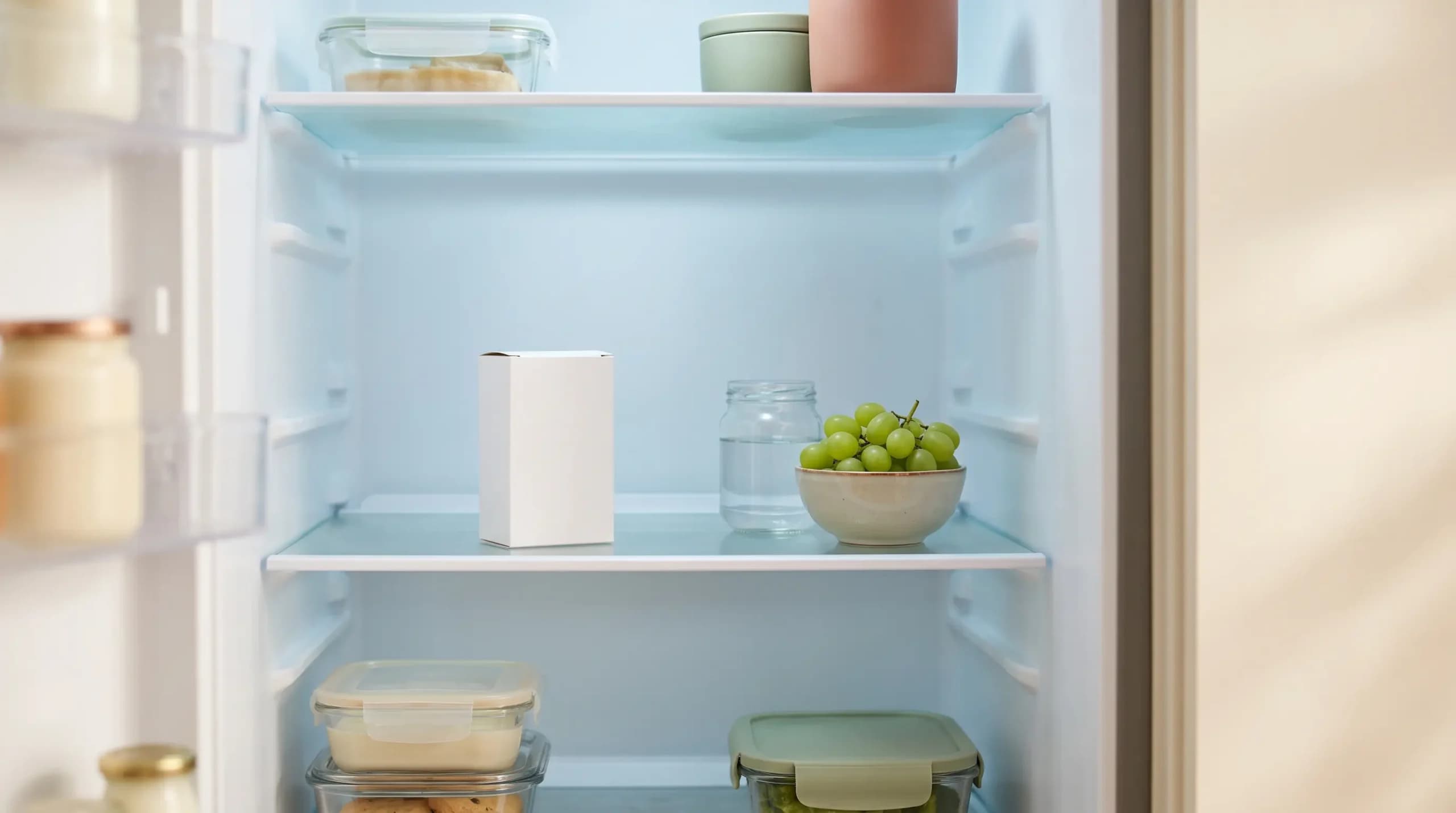
The short answer
Refrigerated at 36°F to 46°F (2°C to 8°C), tirzepatide lasts in the fridge until the expiration date printed on it. Out of the fridge the window is far shorter: up to 21 days for single-dose pens and vials. The critical rule is that this clock does not restart when it goes back in the fridge. Never freeze it.
Key takeaways
- In the fridge at 36-46°F (2-8°C): tirzepatide lasts until its printed expiration date.
- Out of the fridge: up to 21 days for single-dose pens and vials, at or below 86°F (30°C).
- The clock does not reset. Once out, it stays out. Do not return it to the fridge.
- Never freeze tirzepatide. Freezing damages it permanently, and thawing does not reverse this.
- Compounded tirzepatide follows its own pharmacy’s instructions, which may differ from these.
Does Tirzepatide Need to Be Refrigerated?
Yes. The FDA prescribing information for Zepbound directs that tirzepatide is refrigerated between 36°F and 46°F (2°C and 8°C), in its original carton, until you are ready to use it. Refrigeration is what allows it to remain effective until its expiration date.
The reason comes down to what tirzepatide actually is. Tirzepatide is a peptide, a chain of amino acids, and peptide-based medications are physically fragile in a way that most tablets are not.
As set out in the review of protein pharmaceutical stability published in Pharmaceutical Research, a peptide’s function depends on its three-dimensional shape. Heat supplies energy that disrupts that shape, a process called denaturation. A denatured peptide cannot bind properly to its target receptors, which means the medication delivers less effect even though the liquid in the vial looks unchanged.
This is why the cold chain matters from the factory to your fridge. Refrigeration slows the molecular movement that leads to degradation, which is what protects the potency behind how long tirzepatide takes to work.
Two practical points follow.
Keep it in the original carton. Light exposure is a separate degradation pathway from heat. The carton is packaging and protection at the same time.
Avoid the fridge door. Door temperatures fluctuate every time the fridge opens and are typically the warmest part of the appliance. A middle shelf, away from the back wall and cooling element, holds temperature much more reliably.
The back wall carries the opposite risk: accidental freezing.
How Long Does Tirzepatide Last in the Fridge?
According to the FDA prescribing information for Zepbound, tirzepatide stored continuously in the fridge at 36°F to 46°F (2°C to 8°C) lasts until the expiration date printed on the pen, vial or carton. Refrigeration does not extend that date, and nothing extends it.
That expiration date assumes the medication has stayed within its labelled temperature range the whole time. A product that spent an afternoon in a hot car is not covered by its printed date any more.
Two conditions apply throughout.
- Stay inside the range. Below 36°F (2°C) risks freezing damage. Above 46°F (8°C) starts the room-temperature clock.
- Keep it in the carton. Protection from light applies in the fridge as well as out of it.
Table 1: Storage Conditions at a Glance
| Condition | Temperature range | How long | Notes |
|---|---|---|---|
| Refrigerated | 36-46°F (2-8°C) | Until the printed expiration date | Original carton. Avoid the door and the back wall |
| Room temperature | Up to 86°F (30°C) | Up to 21 days for single-dose pens and vials | Cannot return to the fridge afterwards |
| Above 86°F (30°C) | Above 86°F (30°C) | Not suitable for storage | Contact your pharmacy. Do not assume it is still effective |
| Frozen | Below 32°F (0°C) | Never | Discard. Do not use even if it thaws and looks normal |
Figures reflect the FDA prescribing information for Zepbound® single-dose pens and vials. Multi-dose pens and compounded products differ. See the product comparison below.
How Long Can Tirzepatide Stay Out of the Fridge?
According to the FDA prescribing information for Zepbound, single-dose tirzepatide pens and vials can stay out of the fridge for up to 21 days, provided the temperature does not exceed 86°F (30°C).
After 21 days at room temperature the product should be discarded, even if it has not been used and even if the printed expiration date is still months away.
According to the prescribing information for Zepbound, this 21-day window applies to single-dose pens and single-dose vials. Multi-dose pens have a different window, and compounded products follow their own pharmacy’s documentation.
Two thresholds matter and are frequently confused.
86°F (30°C) is the ceiling, not the target. Room temperature is usually described as 68°F to 77°F (20°C to 25°C). The 86°F figure is the upper limit beyond which the product is no longer considered within its labelled conditions.
A hot car in summer passes that limit quickly.
21 days is cumulative, not per episode. Four hours out on Monday and six hours out on Thursday both count toward the same total.
⏱️ The Most Expensive Misunderstanding in Tirzepatide Storage
Once tirzepatide has been out of the fridge, putting it back does not restart the clock. It does not pause it either.
The 21-day window describes cumulative time at room temperature across the product’s whole life, not time since it last left the fridge.
Degradation is not reversible. Warming a peptide causes cumulative structural change, and cooling it afterwards does not undo that change. The fridge slows further degradation. It does not repair what has already happened.
In practice this means one thing. Once you take a pen or vial out and leave it out, treat it as out. The FDA prescribing information for Zepbound instructs that once stored at room temperature, the product should not be returned to the refrigerator.
The expensive version of this mistake is a full month’s supply cycling in and out of the fridge over several weeks, then being discarded. Track when each pen or vial first came out and write it on the carton.
What if Your Tirzepatide Got Too Warm or Was Left Out?
If tirzepatide has been exposed to temperatures above its labelled range, or left out longer than its room-temperature window, the safe assumption is that it may no longer be fully effective. The table below covers the situations people actually encounter.
Table 2: “I Left It Out” Scenarios
| What happened | Is it likely still usable? | What to do now |
|---|---|---|
| Left out a few hours in a cool room | Likely fine if within the labelled window and under 86°F (30°C) | Count the hours toward your 21-day total. Note the date on the carton |
| Left out overnight in a cool room | Likely fine if the room stayed under 86°F (30°C) | Count it toward the total. Do not return it to the fridge |
| Left out several days | Depends on cumulative time and temperature | Count all days out. Discard once past the labelled window |
| Left in a hot car or direct sunlight | Do not use. Car interiors exceed 86°F (30°C) rapidly | Contact your pharmacy for replacement guidance |
| Frozen, or found in the freezer | Do not use, even if it has thawed and looks normal | Discard and contact your pharmacy |
| Stored in the fridge door | Uncertain. Door temperatures fluctuate and may exceed the range | Call your pharmacy. Move remaining stock to a middle shelf |
| Delivery sat outside in heat | Do not assume it is usable. Do not self-assess | Contact the dispensing pharmacy before using it. See below |
| Out of the carton in bright light | Uncertain, depending on duration and intensity | Return it to the carton and call your pharmacy if exposure was prolonged |
| Past the room-temperature window | Do not use, regardless of the printed expiry date | Discard in a sharps container and arrange a replacement |
Every uncertain case routes to your pharmacy. This table cannot assess your specific product, and a pharmacist can.
The underlying principle is straightforward. Ask two questions: how long was it out, and how hot did it get. If either answer is unknown, treat it as unknown rather than assuming the best case.
Calling the pharmacy costs a few minutes. Injecting a degraded dose costs a week of treatment, and you may not realise anything went wrong until your results stall.
Can Tirzepatide Be Frozen?
No, tirzepatide must never be frozen. The prescribing information is explicit that it should not be frozen, and freezing causes irreversible structural damage to the peptide that thawing does not reverse.
Product that has been frozen should be discarded, even if it looks completely normal afterwards.
When the liquid freezes, ice crystals form and physically disrupt the peptide’s folded structure. That unfolding is permanent. The molecule may still be present in the vial but no longer function properly.
This is precisely why appearance is not a reliable test. A thawed pen can look identical to an unaffected one.
Accidental freezing happens more often than people expect. Two situations account for most of it.
- Fridge back wall contact. The cooling element sits behind the rear wall, and items pressed against it can drop below freezing even when the fridge reads correctly.
- Direct contact with ice packs in a travel case. A frozen gel pack touching the pen can freeze the product locally.
If you think your tirzepatide froze, do not use it. Contact your pharmacy for replacement guidance.
How Can You Tell if Tirzepatide Has Gone Bad?
Tirzepatide should be a clear, colorless to slightly yellow liquid. According to the FDA prescribing information, you should inspect it visually before each use and not use it if you see particles or discoloration.
Signs to discard:
- Cloudiness or a hazy appearance.
- Visible particles, flakes or floating matter.
- Discoloration beyond slightly yellow, particularly brown or pink tones.
- A damaged, cracked or leaking pen or vial.
- A missing, unreadable or altered label.
The limitation of visual inspection matters more than the checklist. Appearance alone cannot tell you whether a medication is still potent.
Heat degradation frequently produces no visible change at all. A pen left in a hot car looks exactly like one kept properly refrigerated. So does one that froze and thawed.
This is why the rule is temperature history first, appearance second. Medication that has been exposed beyond its labelled conditions should be discarded even when it looks perfectly fine. Medication that looks wrong should be discarded regardless of its storage history.
How Should You Store Tirzepatide When You Travel?
Tirzepatide travels well with a little planning. The essentials are keeping it in your carry-on, keeping it in its carton, and keeping it cool without freezing it.
Always carry it in hand luggage, never checked baggage. Aircraft holds can drop below freezing, and freezing ruins the product. Checked bags also get lost, and a delayed bag means missed doses.
Bring your prescription documentation. A pharmacy label or prescriber’s letter smooths security questions and helps if you need a replacement while away.
Airport security is straightforward. According to Transportation Security Administration guidance, medications and cooling packs are permitted in carry-on baggage. Declare them at screening and expect a manual inspection. Rules vary by country, so check your destination’s requirements before flying.
Use insulated cases carefully. A cooling case protects against heat, but a frozen gel pack in direct contact with the pen can freeze it. Wrap the gel pack, or place a barrier between it and the medication.
Match the trip length to the window. Short trips fit comfortably inside the room-temperature window. Longer trips need genuine refrigeration at your destination, so confirm your accommodation has a fridge.
Time zones and dose day. Small shifts in injection timing are usually manageable, but the prescribing information sets minimum intervals between doses. Ask your prescriber what applies to you before you travel rather than improvising.
What to Do if Your Delivery Arrives Warm
If your tirzepatide delivery arrives warm, sat outside in heat, or with melted cooling packs, do not use it until you have spoken to the dispensing pharmacy. Do not attempt to assess it yourself.
This is a routine situation for telehealth patients and pharmacies handle it regularly. Take these steps.
- Photograph the package as it arrived, including the cooling packs and any temperature indicator.
- Note the delivery time and roughly how long it was outside.
- Refrigerate it while you make the call, unless it is obviously frozen.
- Contact the dispensing pharmacy immediately, not your prescriber. They handle shipping issues and replacements.
- Do not inject it until they have advised you.
Pharmacies expect these calls and generally replace affected shipments. Setting up delivery notifications so packages are not left outside prevents most of this.
Storage problems are invisible until your results stall. Degraded medication delivers less drug, and nothing about the pen tells you. A supported program means someone reviews handling alongside your dose when progress slows, instead of you assuming the medication has stopped working.
Storage Differences: Pens, Vials and Compounded Tirzepatide
Storage rules for tirzepatide are not universal. They differ by product format and by manufacturer, and guidance written for a branded pen does not automatically apply to a compounded vial.
Table 3: Product Type Comparison
| Product type | Fridge | Room temp | Key difference |
|---|---|---|---|
| Single-dose pen | 36-46°F (2-8°C) until expiry | Up to 21 days, max 86°F (30°C) | Used once, then discarded. Cannot return to fridge |
| Single-dose vial | 36-46°F (2-8°C) until expiry | Up to 21 days, max 86°F (30°C) | Same window as the pen. Requires a separate syringe |
| Multi-dose pen (KwikPen) | 36-46°F (2-8°C) until expiry | Up to 30 days, max 86°F (30°C) | Longer window because it is designed for repeated use |
| Compounded vial | Follow your pharmacy’s instructions | Follow your pharmacy’s instructions | Formulations and stability vary by pharmacy. Their documentation governs |
On compounded tirzepatide specifically. As the FDA explains in its guidance on compounding, compounded products are prepared by compounding pharmacies to their own formulations rather than to an approved manufacturer’s specification. Concentration, preservatives and container type can all differ from branded products, and each of those affects stability.
The 21-day figure from the Zepbound label was established for that product. It is not a general property of tirzepatide, and applying it to a compounded vial is an assumption, not a fact.
If your compounded medication arrived without clear storage instructions, ask for them. That is a reasonable request and the pharmacy should provide it in writing.
Storage Is One of the Quiet Reasons Treatment Stalls
Most people never connect a storage mistake to a disappointing month on the scale, or to results that stall for no obvious reason. The pen looked fine. The injection went in. Nothing signalled a problem.
That is exactly why it goes unexamined. When results stall, the assumption is that the medication stopped working or the dose is wrong. Handling is rarely checked.
A supervised program checks it. Storage, injection technique and dose get reviewed together when progress slows, which is how you avoid escalating a dose to solve a fridge problem.
 Facebook
 Email
Email